
CS-Effect’s Lynda Carlisle joined Dustin Siggins and fellow communications leaders on Cracking the Comm Code for a live conversation on one of the most complex issues in crisis communications: when and how leaders should apologize. From navigating disingenuous responses to balancing legal risk with human impact, Lynda shared practical guidance on how organizations can protect trust, credibility, and long-term reputation when stakes are high.
Why are disingenuous apologies more damaging today?
We’ve crossed a real threshold when it comes to disingenuous apologies. Even four or five years ago, CEOs were jumping into conversations they didn’t actually need to be part of just to “be present.” Over time, that diluted the impact of anything meaningful they might later need to say.
Since then, there’s been a shift toward being more strategic about which conversations companies participate in. The mindset now is: Do we actually need to say something here versus this isn’t really our business unless we’re directly involved.
When a response is necessary, presenting facts and data to support recommendations is critical. It’s also important to understand how expensive it is to regain a customer compared to keeping an existing one.
If a company goes through a crisis and manages it well, there’s about a 70% chance of maintaining customer trust. That statistic alone should drive a more thoughtful approach to crisis response.
When is an apology non-negotiable in a crisis?
When children are involved, or when there are serious injuries or deaths, an apology and acknowledgment must come forward—regardless of who is to blame.
There’s a difference between apologizing that something happened and accepting responsibility for what happened. Apologizing that a family experienced trauma is not the same as admitting fault.
What role does trust play before a crisis even happens?
Don’t undervalue the amount of investment that you put in building trust in your brand before these crises even start. Understanding who your audiences are, what they’re responding to, and their behaviors, especially on social media, allows you to know how to mitigate issues and connect with them right away if something happens.
There’s an ounce of prevention worth a pound of cure. There are many things you can do through good PR and good strategic communications with your stakeholders so that as you’re putting those deposits into that account, when something eventually happens, you’ll have a strong base to stand on.
Once you do issue an apology or if you don’t and you let things roll a little bit, you’ve got solid ground to start from. We encourage our clients to make those investments before something happens so that when you get to that point, you already have that foundation.
How important is the human impact in emotionally charged crises?
Leaders can acknowledge pain and trauma without accepting blame.
I think that’s something that a lot of companies overlook. Attorneys, certainly—we’ve worked with so many attorneys that don’t want to release any sort of comment, which gives us PR folks heart attacks, because the last thing we want to do is say “no comment.”
I do think there’s a level of this human approach that, at the end of the day, when you’re putting your head to pillow, you ask whether you’re happy with how your company has come across in a type of crisis that any human can relate to.
And I’ve worked with situations ranging from sexual abuse of children, CEOs being accused of sexual abuse, or racial dismissal. There are a lot of emotions involved in those cases, which are very different from something like a software security company dealing with a data breach. It’s a very different scenario.
But at the end of the day, I think in highly emotional situations, empathy often needs to take priority alongside speed and strategy.
How do you get a leader involved in a crisis?
Data matters. Monitoring sentiment and understanding the cost of lost trust helps leaders make informed decisions. When crises are managed well, companies have a strong chance of maintaining trust.
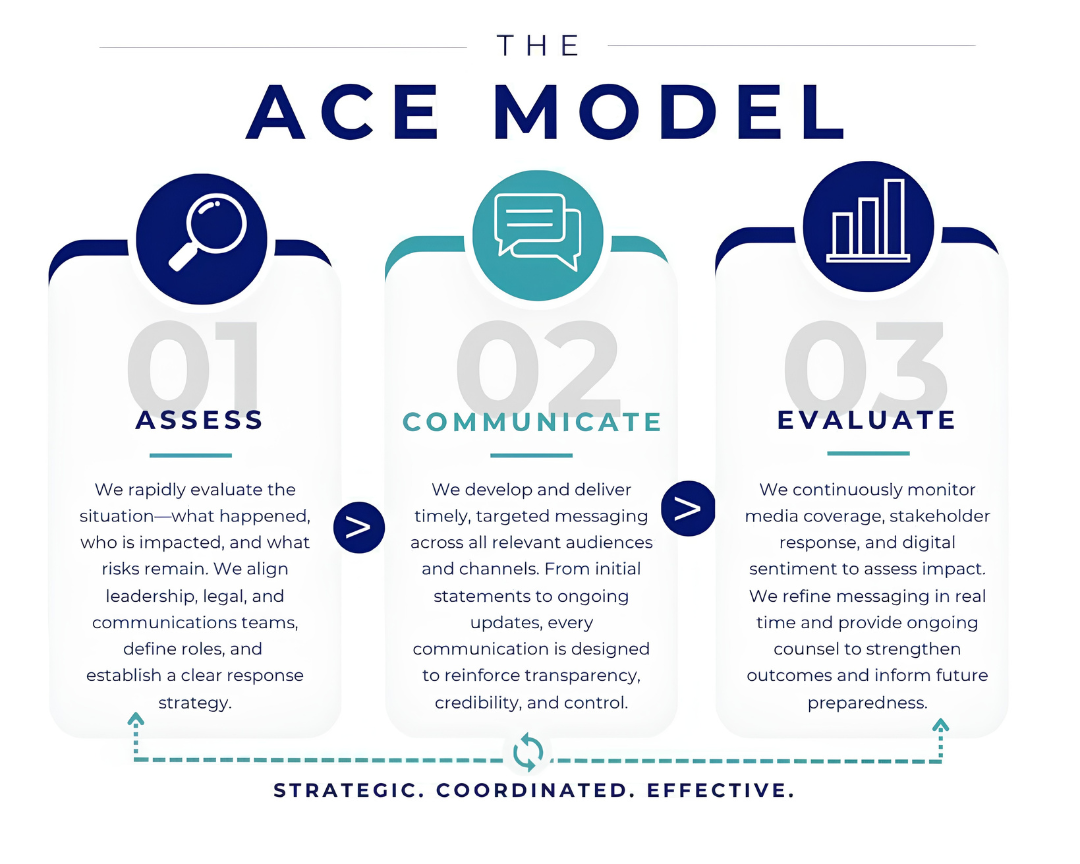
At CS-Effect, we approach crisis communication through our ACE Model: Assess, Communicate, Evaluate to navigate high-risk moments with confidence.
How CS-Effect Can Help
CS-Effect works with organizations to build communication strategies that stand up under pressure. Using the ACE Model, we help clients navigate complexity while staying aligned with their mission and values.
To learn more about our crisis communications and thought leadership work contact cwarltier@cs-effect.com or visit: .https://www.cs-effect.com/issues-management.